
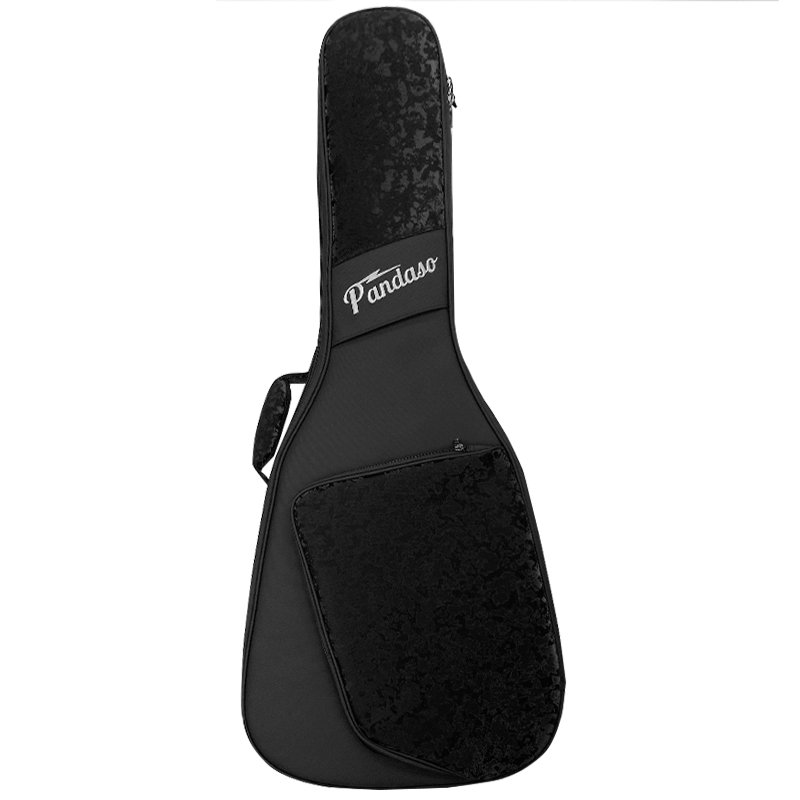
Carrying a guitar for years shapes your back, whether you notice it or not. Bag ergonomics — strap placement, padding and balance — matter more than most players realize. Here is what good design looks like.
Where the Weight Should Sit
The guitar should ride high on the back, close to the spine, with the weight spread across both shoulders. A bag that hangs low pulls on the lower back; one that tips backward strains the shoulders unevenly. Strap attachment points high and wide on the bag body create the best balance.
Strap Design
- Width: 8–10 cm padded shoulder sections spread pressure; narrow straps dig in.
- Curve: straps that follow the shoulder contour sit better than straight strips.
- Chest strap: keeps straps from sliding apart and stabilizes the load.
- Adjustable length: both straps adjustable, with easy reach adjusters.
Padding That Works
Good back padding is firm and contoured, with airflow channels (mesh) so you do not soak the bag in summer. Soft foam that compresses flat offers no real cushioning. Check that padding covers the full area that touches your back, not just a strip.
Handles and Carry Modes
A top handle for short carries and van load-ins is essential. Some bags add side handles and luggage pass-through (for stacking on wheeled cases) — useful for commuters. Quick-release buckles beat zippers for daily opening.
Testing Before Buying
Load the guitar and walk for five minutes with the bag adjusted properly. Discomfort in the first five minutes means it will hurt after an hour. If you carry daily, the ergonomic upgrade is worth the price difference. Browse ergonomic gig bags, or spec ergonomic features for your OEM line.