
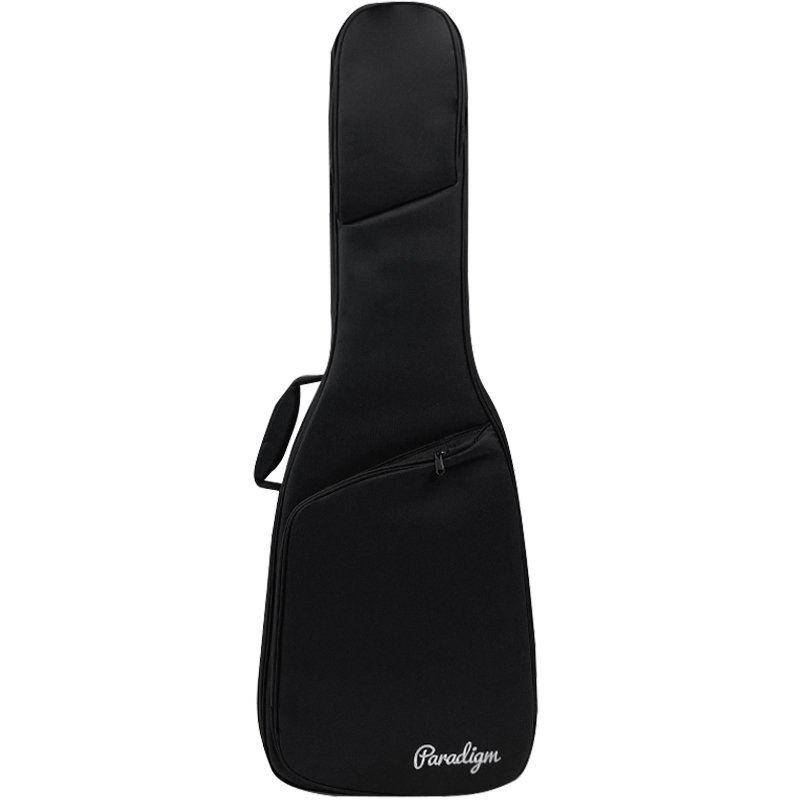
Gig bags look similar at a glance, but the differences that matter are inside. Here is the feature checklist we use when building bags — and the one you should use before buying.
1. Padding That Matches the Instrument
Check the thickness at the bottom, corners and headstock. A bag that is thin across the bottom offers almost no drop protection. Look for multi-layer padding or memory foam at the neck and headstock — that is where the most fragile and expensive parts of the guitar sit.
2. Neck Support
Open the bag and look at the headstock end. There should be a padded block or cradle that holds the neck up off the bottom of the bag. A bag without neck support lets the headstock rest on the floor of the bag — every bump transfers straight into the neck.
3. Waterproofing
A 1680D shell with a PU waterproof coating handles rain, spilled drinks and van floors. Uncoated fabric soaks through and lets moisture sit against the guitar.
4. Storage Pockets
At least one large exterior pocket for cables, strings and a strap is standard on good bags. Padded tablet or phone pockets are a plus for modern players. Pockets should zip smoothly with zippers that do not snag.
5. Hardware and Stitching
- Reinforced stitching at stress points — handle mounts, strap loops, zipper ends.
- Solid metal hardware or high-quality plastic that will not crack in the cold.
- Padded carry handle with a comfortable grip, plus backpack straps for longer carries.
6. Fit
The guitar should slide in snugly with no rattling, and the zipper should close without forcing. A loose fit means the instrument moves inside the bag — protection starts with a correct fit.
Spec Sheet Reference
When you see a bag spec like “1680D waterproof fabric, 20 mm multi-layer padding, memory-foam neck support, reinforced stitching,” you now know exactly what it means and why it matters. Browse gig bags built to this spec or spec a custom bag for your brand.