
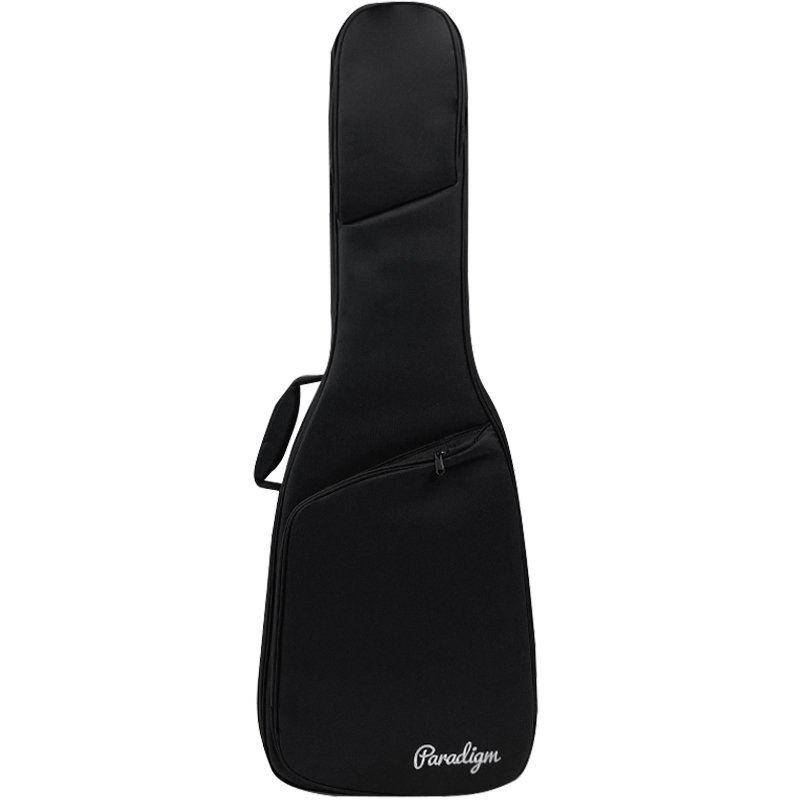
Electric and acoustic guitars look similar in length but need very different cases. Putting an acoustic in an electric case risks damage; the reverse means a rattling, unprotected instrument. Here is what actually differs.
Body Width and Depth
Acoustic bodies are wider and deeper (typically 38–40 cm wide, 10–12 cm deep at the lower bout) than electric bodies (32–35 cm wide, 4–5 cm deep). The case interior must match both the outline and the depth — depth is where most mismatches happen.
Cutaway vs Non-Cutaway
Many acoustics (and some electrics) have a cutaway — the upper bout is scooped for upper-fret access. Cases are shaped for cutaway or non-cutaway bodies. A non-cutaway case will press on a cutaway shoulder; a cutaway case leaves a non-cutaway guitar loose.
Neck and Headstock Support
Both need a proper neck cradle that suspends the headstock. Acoustics with 12-fret necks and slot-head headstocks need extra clearance. Check the case headstock area against your instrument before buying.
Protection Priorities
- Acoustic: the thin carved/laminate top is the fragile part — lid padding must clear the bridge and pickguard.
- Electric: the neck and headstock are the vulnerable areas — body is relatively tough.
Same Bag for Both?
Universal gig bags with adjustable internal straps and removable padding can fit both, but only loosely. For real protection, buy the case shaped for your instrument type. See our gig bag range or browse hard cases by instrument type.