
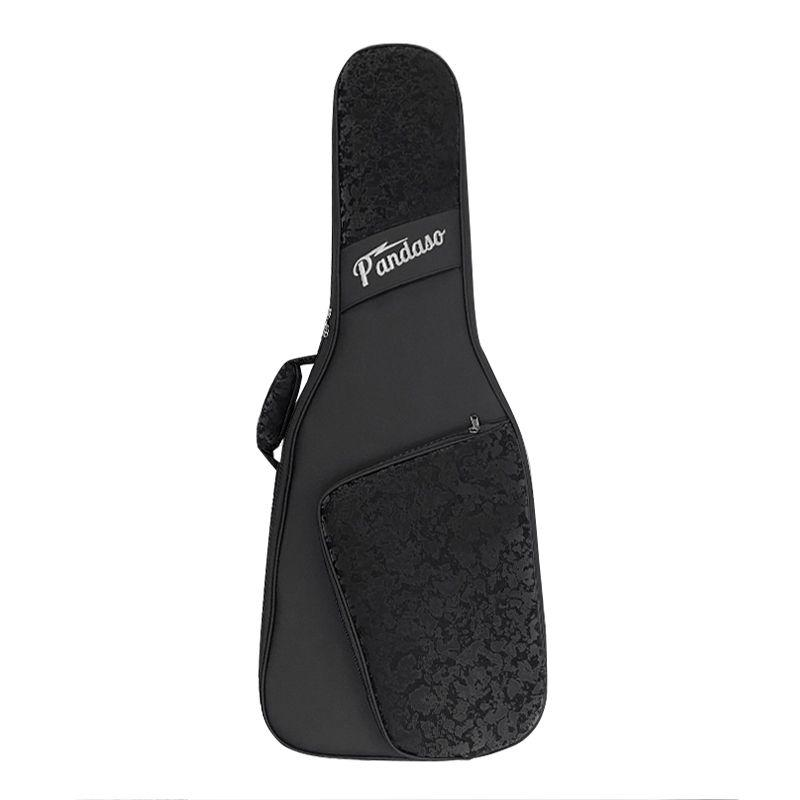
“Bag,” “case,” “soft case,” “flight case” — the names get thrown around loosely, but they describe genuinely different levels of protection. Here is a clear breakdown of what each type actually is.
Gig Bag (Soft Bag)
A fabric bag with foam padding, usually 10–20 mm thick. It protects against scratches, dust and light bumps, and it is the lightest and most portable option. Gig bags with backpack straps are the standard choice for commuting players.
Soft Case (Padded Case)
A step up: thicker multi-layer padding, reinforced edges, often a semi-rigid backboard. Soft cases offer real drop protection while staying lighter than hard cases. Many players treat a quality soft case as their main daily case.
Hard Case
A rigid shell — plywood, ABS or molded EVA — with a soft interior. It protects against crushing and serious impacts and is the right choice for air travel, shipping and valuable instruments.
Flight Case
An aluminum or heavy plywood case with metal corners and latches, built to survive airline baggage and tour trucks. Overkill for most players, essential for professional touring.
How to Choose
| You Mostly… | Choose |
|---|---|
| Walk or take transit to rehearsals | Gig bag with backpack straps |
| Drive to local gigs | Soft case or premium gig bag |
| Fly or ship instruments | Hard case |
| Tour professionally | Flight case or hard case |
| Own a valuable or vintage guitar | Hard case |
Whatever you choose, the case must fit correctly and support the neck. See our padded gig bags for daily carry, or read our full gig bag vs hard case comparison.