
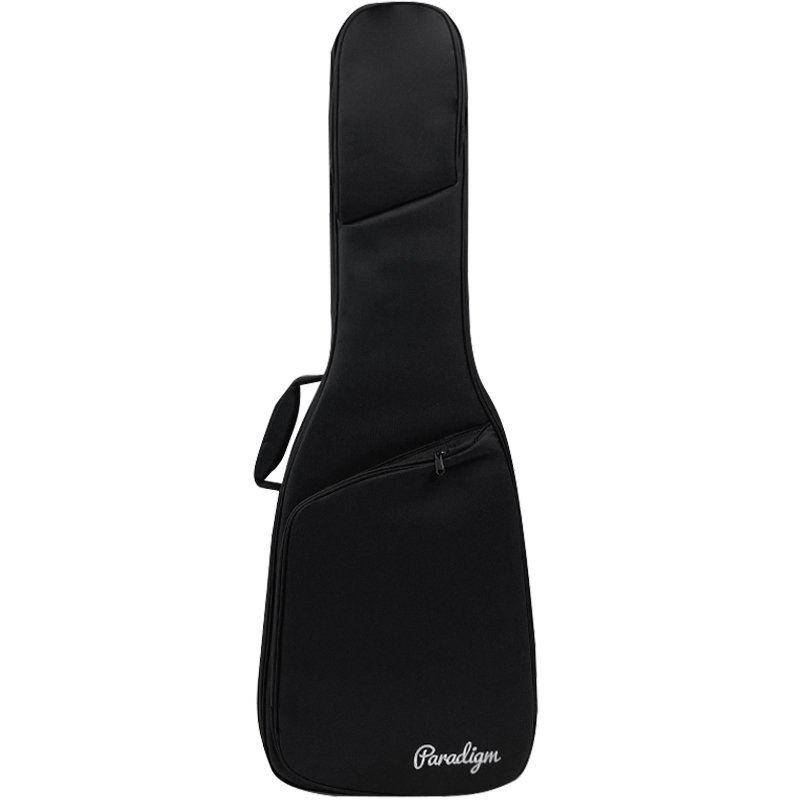
Most guitars fit a standard case — until they do not. Measuring your instrument correctly is the difference between a snug, protective case and one that lets the guitar rattle or stresses the neck. Here is the exact method we use in our factory.
What You Need
- A soft tape measure (metal tapes can scratch finishes).
- A flat table long enough for the instrument.
- Paper and pen to record three numbers.
Measurement 1: Total Length
Lay the guitar flat on its back. Measure from the tip of the headstock to the very bottom of the body in a straight line. This is the number that matters most for gig bags — a bag listed as fitting “standard electric” usually covers 98–104 cm; basses need 115–125 cm.
Measurement 2: Body Width
Measure the widest point of the lower bout, straight across. Most electric guitars are 32–38 cm wide; dreadnought acoustics are 38–40 cm. The case interior must be a few centimeters wider than this — not exactly the same.
Measurement 3: Body Depth
Measure from the back of the body to the top of the bridge area — the deepest point. Acoustic guitars are noticeably deeper (10–13 cm) than electrics (4–6 cm), which is why acoustic and electric cases are not interchangeable.
Checking the Fit
- Slide the guitar into the case; it should settle without forcing.
- The headstock should be suspended by a neck cradle, not touching the bottom.
- When closed, the guitar should not shift more than a few millimeters.
For Custom and OEM Orders
When you order custom cases or gig bags, send the factory these three measurements plus photos of the body shape. Good factories cut interior cradles to fit the actual instrument, not just a generic template. Contact our OEM/ODM team with your measurements, or browse ready-made gig bags with listed interior dimensions.