
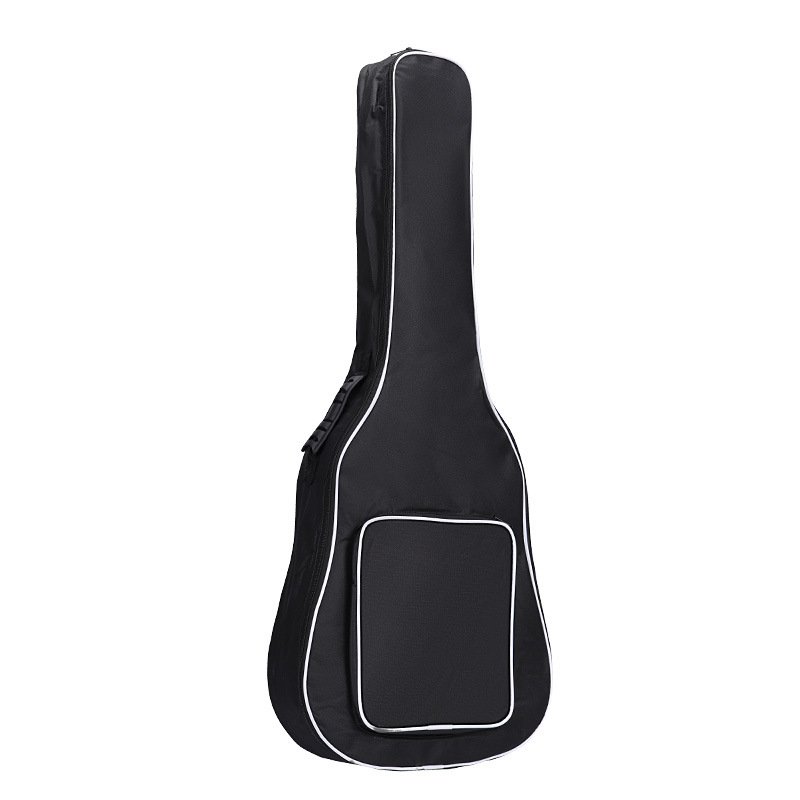
When a guitar case fails, it is almost always the hardware — a latch that snaps, a zipper that splits, a handle that tears. Hardware is where cheap cases reveal themselves. Here is what to know.
Latches
Quality latches are metal with a positive closing action — you feel a firm click. Plastic latches flex and break at the hinge. Check that latches align with the case body when closed; misaligned latches put uneven stress on the shell. Many cases take padlocks — useful for touring.
Handles
The handle takes the entire weight of the case. Look for reinforced attachment points (metal brackets or double stitching) where the handle meets the shell. Leather or rubberized handles grip better than hard plastic. On big flight cases, two or three handles distribute the load.
Zippers
- Size: #8 or #10 zippers are stronger than #5; coil zippers are smoother, molded-tooth zippers are tougher.
- Pulls: metal pulls last longer than plastic and work with gloved hands.
- Water resistance: a zipper flap (storm flap) over the track adds weather protection.
Hinges and Corners
Hard case hinges should be metal and through-riveted, not glued. Corner guards (metal or rubber) absorb the hits cases take when set down — corners wear first. Check that lid hinges have a slight stop so the lid does not over-open.
Care and Inspection
- Lubricate zipper tracks with zipper wax or silicone when they stiffen.
- Tighten loose latch and hinge screws seasonally.
- Replace a failing handle before it fails mid-tour — handles are the most common field repair.
Specifying Hardware for OEM Orders
When you order custom cases, hardware choice changes cost and durability. Ask for metal latches, reinforced handles and #8+ zippers as the baseline. Talk to us about hardware options, or see our hard case range.