
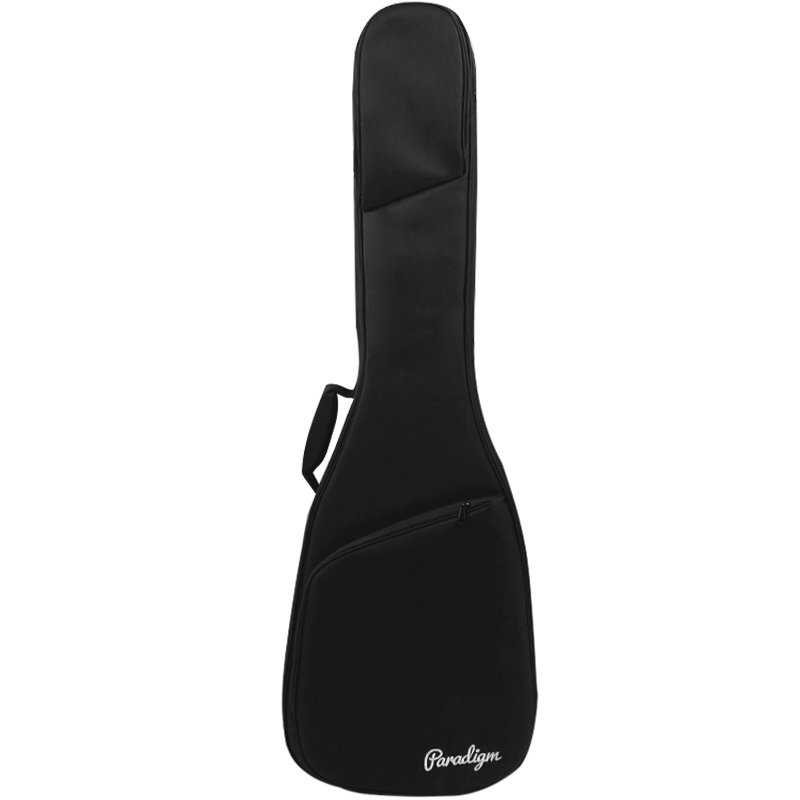
Bass guitars are long, heavy and top-heavy at the headstock — which makes choosing the right gig bag a different game from buying one for a standard electric guitar. Here is what to check before you buy or spec a bass bag.
Length and Fit: Measure the Body and the Neck
Most 4-string basses need an interior length of at least 115–125 cm. Five-string basses with longer scale necks can exceed that, so measure your instrument from the tip of the headstock to the bottom of the body before choosing. A bag that is too short stresses the neck joint — the most expensive repair a bass can have.
Neck Support Is Non-Negotiable
Basses carry their weight in the headstock. A proper bass bag has a padded neck support block or cradle at the headstock end, so the neck is held off the bottom of the bag when standing upright. Without it, the neck takes road shock through the truss rod area every time you set the bag down.
Padding Thickness
- 15 mm foam: fine for around-town and rehearsals.
- 20–30 mm multi-layer padding: recommended for touring, loading in and out of vans.
- Body and headstock reinforcement: look for extra padding at the ends, where bumps happen first.
Materials and Waterproofing
Road cases and gig bags take abuse: rain, van floors, spilled drinks in the backline area. 1680D waterproof fabric with PU coating wipes clean and sheds moisture. Reinforced stitching on the seams and stress points is the difference between a bag that lasts a season and one that lasts a decade.
Carry Options
Bags for long instruments need padded backpack straps or a well-placed handle that balances the instrument at the balance point. Handle placement that is off-balance makes a 4–5 kg bass feel like 10 kg by the end of a load-in.
Bass Bags for Wholesale and OEM
MONOGUITARBAG manufactures bass gig bags in 1680D waterproof fabric and PU leather, in lengths covering 4-string and 5-string models, with custom branding, colors and interior options. See the bass case collection or discuss an OEM/ODM order with our factory team.